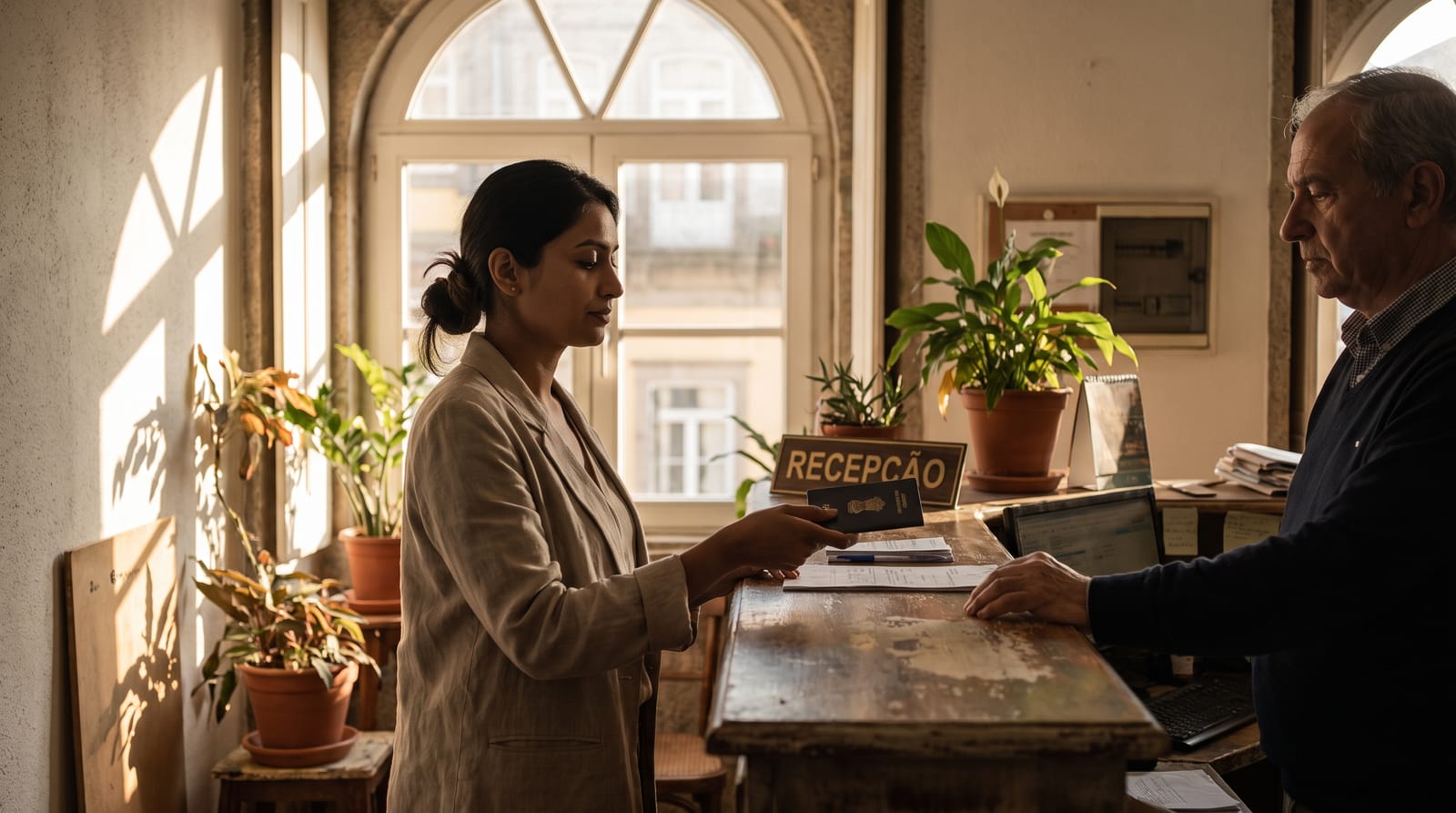
If you have spent any time researching your first solo trip, you have already found two answers, and neither one was useful.
One version treats every destination as a threat and every stranger as a warning sign. The other tells you that nothing bad ever happens to prepared women and all you really need is a good attitude. One of them will scare you out of going. The other will get you there unprepared.
The real answer sits between the two, and that is where this article lives.
So, here it is. Yes. Solo travel is safe for women. Millions of women do it every year and come home with nothing more dramatic to report than a delayed connection and a hotel breakfast that was not worth getting up for.
But safe does not mean risk free. Nothing is risk free. Safe means the risks are known, manageable, and mostly influenced by decisions you get to make yourself.
That distinction matters more than anything else in this article.
The Short Answer Is Yes, But Not Because the World Is Safe
Here is the part most safety articles get wrong. They treat safety as a property of a place, as if some countries hand it out at the border and others do not.
Safety does not work like that. No destination is completely safe, including the one you live in right now. Neighborhoods differ. Times of day differ. Seasons differ. A street that is fine at two in the afternoon is a different street at two in the morning, and that is true in your own city.
Which means the question "is solo travel safe for women" cannot really be answered with yes or no. What can be answered is this. Is the risk of solo travel manageable for an ordinary woman who prepares like an adult? Yes. Consistently, and for a very large number of women every year.
You are not trying to eliminate risk. That option does not exist in any version of your life, including the version where you stay home. You are trying to manage it, which is a completely different job and a much more achievable one.
Once you stop looking for a guarantee, the whole question gets easier to think about.
Why It Feels More Dangerous Than It Usually Is
Your sense of how dangerous solo travel is did not come from data. It came from stories, and stories are not distributed evenly.
Nobody posts about the day that went fine. There is no video of a woman finding a good coffee place, walking back to her room, and going to bed at ten. That day happens millions of times a year and produces no content at all.
What does travel is the rare bad outcome. It gets shared, reposted, commented on, and turned into a warning by people who have never been to the country in question. You can see the same incident from six different accounts and your brain will file it as six events.
This is how fear grows. Not through evidence, but through repetition.
There is a second thing happening too. Your brain estimates how likely something is by how easily you can picture it. If you have seen twenty stories about women in trouble abroad and zero stories about women having an ordinary Tuesday in Lisbon, the first category feels far more common than it is. That is not a flaw in your thinking. It is standard equipment, and it is working exactly as designed.
Then there are the people around you. Everybody has an opinion about a woman traveling alone, and almost all of it arrives as a warning. Very few of those people have ever done it.
So when solo travel feels dangerous, notice what that feeling is actually built from. Usually it is not information. It is exposure.
The Risks Are Real, and Pretending Otherwise Does Not Help You
None of the above means the concerns are imaginary. Dismissing them would be its own kind of dishonesty, and it would leave you worse prepared than the fear did.
The realistic risks look like this.
Theft and pickpocketing. The most common thing that actually goes wrong for travelers anywhere, and it is opportunistic rather than personal.
Scams. Usually built around confusion, hurry, or politeness. They target tourists in general, not women specifically.
Harassment. Ranges from irritating to genuinely unsettling. Varies enormously by place and by context.
Transport. Unfamiliar systems, unofficial taxis, late arrivals into places you cannot yet read.
Alcohol. Anything that reduces your judgment reduces it more when nobody else is holding a piece of the plan.
Misplaced trust. Not strangers in general, but the specific situations where you override your own sense that something is off because you do not want to seem rude.
Read that list again and notice something. Not one of these is unique to traveling alone. You navigate every single one of them at home, most of them without thinking about it.
What changes when you travel solo is not the risk. It is that every decision belongs to you. Nobody else is going to say the taxi looks wrong or that it is time to leave. That is not a reason to stay home. It is a reason to prepare properly instead of just hoping.
What Actually Makes You Safer When You Travel Alone
Most of your safety is decided before anything happens, in decisions so ordinary they do not feel like safety decisions at all.
Where you sleep. What time you land. Who knows roughly where you are. How much you drink. How much attention you have available in a given moment, and whether your phone is holding all of it.
None of that is dramatic, and none of it is a trick. That is why it works. Safety is not one clever move. It is a set of small habits stacked on top of each other so that no single mistake has to carry the whole weight.
Think of it as layers. Arriving in daylight is a layer. Somebody at home having your plan is a layer. Staying somewhere with a lot of reviews and a real reception desk is a layer. Any one of them can fail without much consequence, because the others are still there. That is the entire principle, and it is worth more than any list of hacks you will find online.
There is one layer worth naming on its own, because it is the one women are trained out of using.
Your intuition is real information. It is your brain noticing a pattern before it can explain it, and it is usually quicker than your conscious reasoning. The problem is that most women have spent a lifetime learning to override it in order to avoid being rude, awkward, or dramatic. You have almost certainly stayed in a conversation you wanted to leave because leaving felt impolite.
That habit is expensive when you travel. Being willing to be rude to a stranger you will never see again is one of the most useful skills a solo traveler can have.
The Mistake Almost Every First Time Solo Traveler Makes
She prepares for crime and does not prepare for Tuesday.
Here is what actually fills a solo trip. A delayed flight and a missed connection. A train platform that changed. A restaurant that closed on the day you planned to go. A menu you cannot read. A hotel that turns out to be twenty minutes further from everything than the map suggested. A moment where you have to make a decision and there is nobody to check it against.
Nobody researches how it feels to eat dinner alone on the first night. Nobody prepares for the two hours in an airport where the trip has not started yet and going home still feels possible.
Most solo trips are remembered for logistics, not emergencies. And a woman who has prepared only for danger arrives brittle. The first small thing that goes wrong does not read as a small thing. It reads as proof that she was right to be scared, and that she should not have come.
That is the real risk for a first solo trip. Not the thing you have been Googling. The ordinary friction you never thought to expect.
Should Fear Decide This For You?
Fear is not the enemy here. It has a job, and when it is doing that job properly it makes you better at this.
Useful fear makes you read about the neighborhood before you book. It makes you check what time you land. It makes you pay slightly more for the place with two hundred reviews instead of the place with four. Fear that produces decisions is doing its work.
The other kind produces nothing.
Ask yourself honestly. In the last six months, has your fear about safety produced a single decision? Or has it only produced more research, more tabs, more articles like this one, and no booking?
Because at some point the researching stops being preparation and starts being the thing you do instead of going. Waiting to feel ready is just fear with a more acceptable name.
You do not have to stop being afraid. You have to stop letting the fear be the only voice with a vote.
Why Your First Trip Is Probably Safer Than You Think
Not because of where you go. Because of how you shape it.
A first solo trip that is shorter, closer, and simpler is not a compromise. It is the version that gives you evidence fastest, and evidence is the only thing that ever actually reduces this fear. Reading does not do it. Watching other women do it does not do it. You need one trip where you handled something and it was fine.
Two things worth knowing before that trip.
The first is that overplanning is often fear wearing a spreadsheet. There is a point where more preparation stops making you safer and starts making you fragile, because now the whole trip depends on the plan holding.
The second is that the strange feeling fades much faster than most women expect. Day one alone feels foreign to almost everyone. By the middle of the trip, most women are surprised at how normal it has become, and how much of the fear was about anticipation rather than experience.
Across more than ten solo trips, the things that genuinely tested me were almost never the things I had prepared to be afraid of. They were logistical, boring, and completely solvable. Confidence did not come from believing nothing would go wrong. It came from watching myself handle the small things that did.
So, Is Solo Travel Safe for Women?
Yes.
Not because the world is gentle, and not because being a woman stops mattering the moment you land somewhere new. It does not.
It is safe because the risks are ordinary, known, and heavily influenced by decisions you are fully capable of making. Because millions of women make those decisions every year and come home with photos and stories and slightly too many receipts.
The goal was never to become fearless. The goal is to be prepared enough that fear no longer gets to make the decision on its own.
Staying home is not the safe option. It is only the familiar one, and there is a cost to it that nobody bills you for.
Frequently Asked Questions
Is solo travel safe for women? Yes, with the honest qualification that no travel and no life is risk free. The risks involved in solo female travel are mostly ordinary, mostly opportunistic, and mostly reduced by preparation and attention rather than luck.
What is the safest country for solo female travelers? This is the wrong shape of question, and the ranked lists answering it are not reliable. Safety varies more within a country than between countries. The neighborhood, the season, the time of day and your own decisions all matter more than the border you crossed. A cautious traveler in a supposedly risky country is often safer than a careless one somewhere with a good reputation.
Is it safe to travel alone as a woman for the first time? Yes, and first trips tend to go smoothly precisely because first time solo travelers are careful. The risk is not that you are new. The risk is arriving convinced that nothing can go wrong.
How can a woman stay safe while traveling alone? By stacking ordinary habits rather than looking for one clever trick. Decisions about accommodation, arrival times, alcohol, attention and who knows your plans do more work than anything you can buy. The single most underused skill is being willing to seem rude when something feels wrong.
Should I avoid solo travel if I am naturally anxious? No, though it will feel harder at the start. Anxious women often prepare well, which is an advantage. What matters is whether your anxiety is producing decisions or just producing research.
Does solo travel get less scary after the first trip? For most women, yes, and the change is bigger than they expect. The first trip is not really about the destination. It is about collecting proof that you can handle yourself somewhere unfamiliar, and that proof does not expire.
If safety is the reason you have not booked yet, it is worth finding out whether safety is actually what is stopping you.
Take the free 2-minute quiz and see what is really holding the decision.
Jordyn
Keep Reading
- Nobody Knows Where You Are Today. Here Is Why That Matters
- Your Friend Keeps Cancelling the Trip. Should You Just Go Alone?
- Is It Normal to Feel Scared Before Your First Solo Trip?
- My Family Thinks Solo Travel Is Dangerous. What Do I Do?
- What If I Book a Solo Trip and Then Panic?
- How Do I Choose My First Solo Travel Destination?