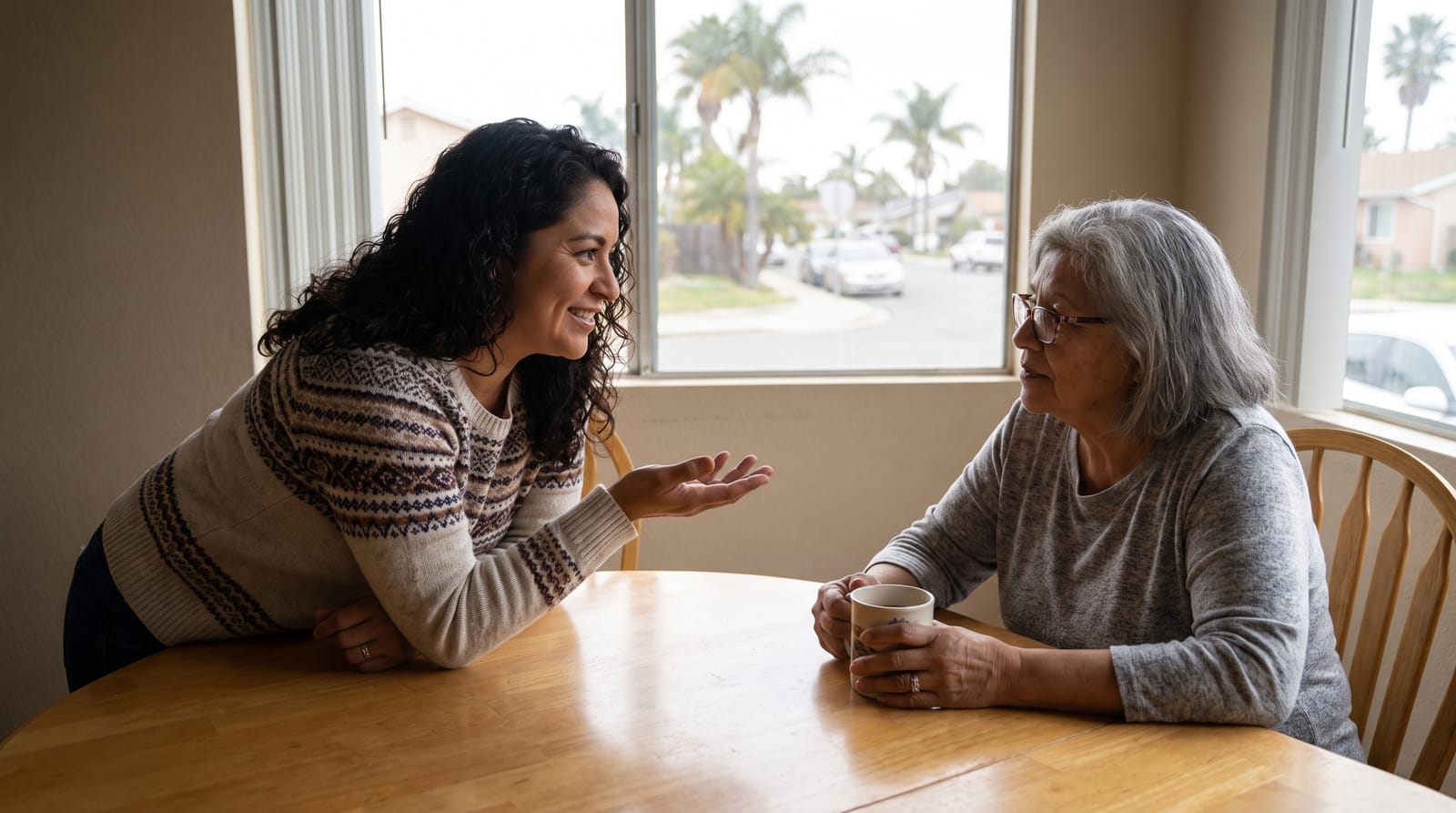
You finally say it out loud. You are thinking about taking a trip on your own.
What comes back is not excitement. It is a set of questions that are not really questions.
Is that not dangerous? Why would you go by yourself? Could you not wait until somebody can go with you? What if something happens and nobody is there?
Ten minutes later you are defending a trip you have not even booked. To people who have never been to the place they are describing.
If your family thinks solo travel is dangerous, you are dealing with one of the most common obstacles there is. It is also one of the least talked about. The destination is rarely the hard part. Carrying everybody else's fear is heavier than any suitcase.
Here is what this article will not do. It will not hand you a script that makes your mother relax. That script does not exist.
What it can do is show you where their fear comes from. What you can change, what you cannot, and how to decide without turning your family into an enemy.
Why Your Family Thinks Solo Travel Is Dangerous
Start with the part that is easy to forget while you are being interrogated at a kitchen table. Almost all of this is love, badly expressed.
They are not trying to control your life. They are trying to prevent something they have vividly imagined. And they cannot switch the image off.
A few things usually feed it.
They have no reference for it. If nobody in your family has traveled alone, solo travel is not a familiar thing with ordinary days in it. It is a blank space. Blank spaces fill with whatever is available.
What is available is bad. Only the rare terrible stories travel. Nobody forwards an article about a woman who had an uneventful week in Portugal. Your family has been fed the exceptions for years, without knowing that is what they are.
They are picturing themselves doing it. This is the big one. When your mother imagines you alone in a foreign city, she is not really imagining you. She is imagining how she would feel, at her age, in a place she cannot picture. Of course the answer comes back terrifying.
You are still their child. Whatever your age. That does not switch off, and it is not about competence.
Here is the distinction that changes how you hear all of it. Fear and facts are not the same thing.
Someone can love you completely, mean every word, and still be working from a picture of solo travel that has nothing to do with the real thing.
Their concern is genuine. Their information is not.
Their Fear Is Not Automatically Your Reality
Worry moves between people easily. It does not have to be accurate to be contagious.
You walk into that conversation with a normal amount of nerves. You walk out with theirs added to yours. Now you cannot tell which part was ever yours, and you are about to make a decision based on the total.
Sometimes your family is not reacting to your trip at all. They are reacting to the version of the trip that exists in their heads. You have never seen it and you cannot correct it, because you did not build it.
One more thing worth being honest about. Sometimes their objection arrives as a relief.
If part of you was hoping somebody would talk you out of this, a worried family is the most respectable exit available. You keep the dream and lose the risk. Nobody can call it fear, because you were only being considerate.
If that lands uncomfortably, sit with it for a second. It is worth knowing which conversation you are actually in.
Should You Try to Change Their Mind?
A little. Then stop.
It is reasonable to tell them your plan, answer real questions, and let them see you have thought about it. Most people relax a little once they realize this is not a whim.
But there is a ceiling, and you should know where it is before you exhaust yourself.
Watch what happens after you answer a concern. You explain the accommodation, and the worry moves to the taxi. You explain the taxi, and it moves to the food. Then the language. Then what if you get ill.
That is not an information conversation. That is anxiety looking for somewhere to land.
Real questions get answered and stay answered. Anxiety relocates.
Once you see that pattern, more evidence will not help. You could hand over a forty page risk assessment and the discomfort would find a new address. Arguing past that point is not persuasion. It is a loop, and women lose years in it.
Some people will not be comfortable with this no matter what you do. That is allowed. Their comfort was never something you could manufacture.
How to Tell Them Without Starting an Argument
Most of these fights are lost in the first sentence.
Compare these two openings. Your family will hear the difference instantly.
"I was thinking about maybe going somewhere on my own. What do you think?"
"I am planning a trip in September. I wanted to tell you about it."
The first invites a vote. You opened a discussion and handed everyone a ballot. Then you are surprised when they use it.
The second reports a decision, warmly. There is nothing to overturn, so there is far less to fight about.
Choosing the second one is not cold. It is just accurate about what kind of conversation this is.
Three other things help.
Acknowledge the worry before you address it. People who feel heard argue less. Saying out loud that you understand why they would think that takes most of the heat out of the room.
Show your preparation without auditioning. One or two sentences about how you chose where to stay is reassurance. Twenty minutes of evidence is a defense case. Defending yourself makes it look like there was a charge.
Do not try to win. Your mother is not going to concede the point and thank you for the education. The goal is not agreement. It is a conversation that ends without damage.
Something like this covers it:
"I understand why that worries you. I have thought about it a lot. I have been careful about where I am staying and how I am getting around, and I feel good about the plan. I am not going to pretend nothing could ever go wrong. I would just rather do this than keep waiting."
Then stop talking. Let it sit. The urge to fill the silence with more justification is what turns a statement into a debate.
What to Do If They Still Disapprove
Some of them will not come around. You need a plan for that which is not simply waiting longer.
Start by separating two things that feel identical. Approval is somebody being glad about your decision. Permission is somebody allowing it.
You may want the first. You almost certainly do not need the second.
Most women here are not waiting to be allowed. They are waiting to be approved of. That is a softer trap and a stickier one, because it can run for years without ever looking like fear.
Then separate disappointment from danger. If your family is unhappy about this trip, that is uncomfortable. Discomfort is a real cost. It is not evidence. Their disapproval tells you how they feel. It tells you nothing about whether the trip is sensible.
Waiting until everybody is comfortable is the same as waiting forever. Somebody will always be uneasy about something. Make their comfort the condition and you have handed your calendar to people who never asked for it.
One honest caveat. If you are financially dependent on the people objecting, or living under their roof, your situation has real constraints. Pretending otherwise would be useless. The principle still holds. The timeline is different, and part of the work is building the independence that turns this into a courtesy rather than a negotiation.
How to Reassure Them Without Handing Over the Decision
There is a version of keeping your family informed that is generous. There is a version that quietly puts them back in charge.
The difference is not what you share. It is why.
Information you offer freely is a gift. Information you supply in order to be approved of is a permission slip. Establish that pattern once, and every future trip goes through the same committee.
So tell them where you are going and roughly what the shape of the trip is. Agree on some contact. Keep it light enough that you will actually do it.
What you do not do is build a reporting system where silence gets treated as an emergency. That is not reassurance. A daily proof of life requirement does not calm an anxious parent. It only gives the anxiety a schedule.
Decide the level of contact you are comfortable with. Tell them what it will be. Then hold it.
The Hardest Part Is Usually the Guilt
Not the argument. The feeling afterward.
You book it, and instead of relief there is a low hum of having done something selfish. You picture your mother worrying while you sit in an airport. You start wondering whether wanting this makes you a bad daughter.
Three things are worth being clear about.
Their worry is not a bill you owe. You did not create it and you cannot settle it. Cancel the trip and the worry stays. It finds something else, because it belongs to them and it existed before your trip did.
You cannot make another adult feel safe about your life. That option is not on the table, no matter how much detail you provide. Their peace of mind is their own work.
And caring how your family feels does not mean organizing your life around what frightens them. Both can be true in the same week. You can love people deeply and still not let their anxiety set the limits of what you are allowed to do.
The guilt usually fades around the second day of your trip. That tends to be the moment the dangerous place turns out to be a normal street with normal people on it.
So, What Do You Actually Do?
At some point this stops being a conversation and becomes a decision. Here is where the decision actually sits.
You are not choosing between your family and your trip. You are choosing what your family's fear is allowed to control.
It gets to be heard. It gets to make you prepare more carefully than you otherwise would. It does not get to hold the calendar.
The people who love you most may never stop worrying. That is part of what loving someone looks like, and it is not yours to fix.
Frequently Asked Questions
What do I do if my family thinks solo travel is dangerous? Have the conversation properly once, then watch what happens next. If your answers settle the concern, keep talking. If each answer produces a fresh worry, you have hit the ceiling, and more evidence will not move it.
How do I convince my parents that solo travel is safe? Usually you cannot, and pushing harder tends to make it worse. Persuasion works on people who are missing facts. It does not work on people who are managing a feeling. Aim for them seeing that you have thought this through.
Why are my parents against solo travel? Because they have no reference point for it, and the only stories they have met are the rare bad ones. They are also imagining themselves in your position, which produces a much more frightening answer than imagining you in it.
Should I cancel my solo trip because my family is worried? Not because of worry alone. Adjust the plan if they raise something specific you had genuinely missed. General unease about the idea of you traveling alone is a feeling, not a risk assessment.
How do I reassure my family while I am traveling alone? Agree the level of contact before you leave, and pick one you will actually keep. Light and consistent works better than detailed and frequent. Frequent check ins tend to feed the anxiety rather than settle it.
Is it okay to travel alone even if my family disagrees? Yes, if you are an adult making an informed choice. Wanting their blessing is fair, and it is a real loss when it does not arrive. It is still a different thing from needing their sign off.
If other people's fear has become the reason you have not booked, it is worth knowing whose fear is actually running this.
Take the free 2-minute quiz and find out what is really holding the decision.
Jordyn