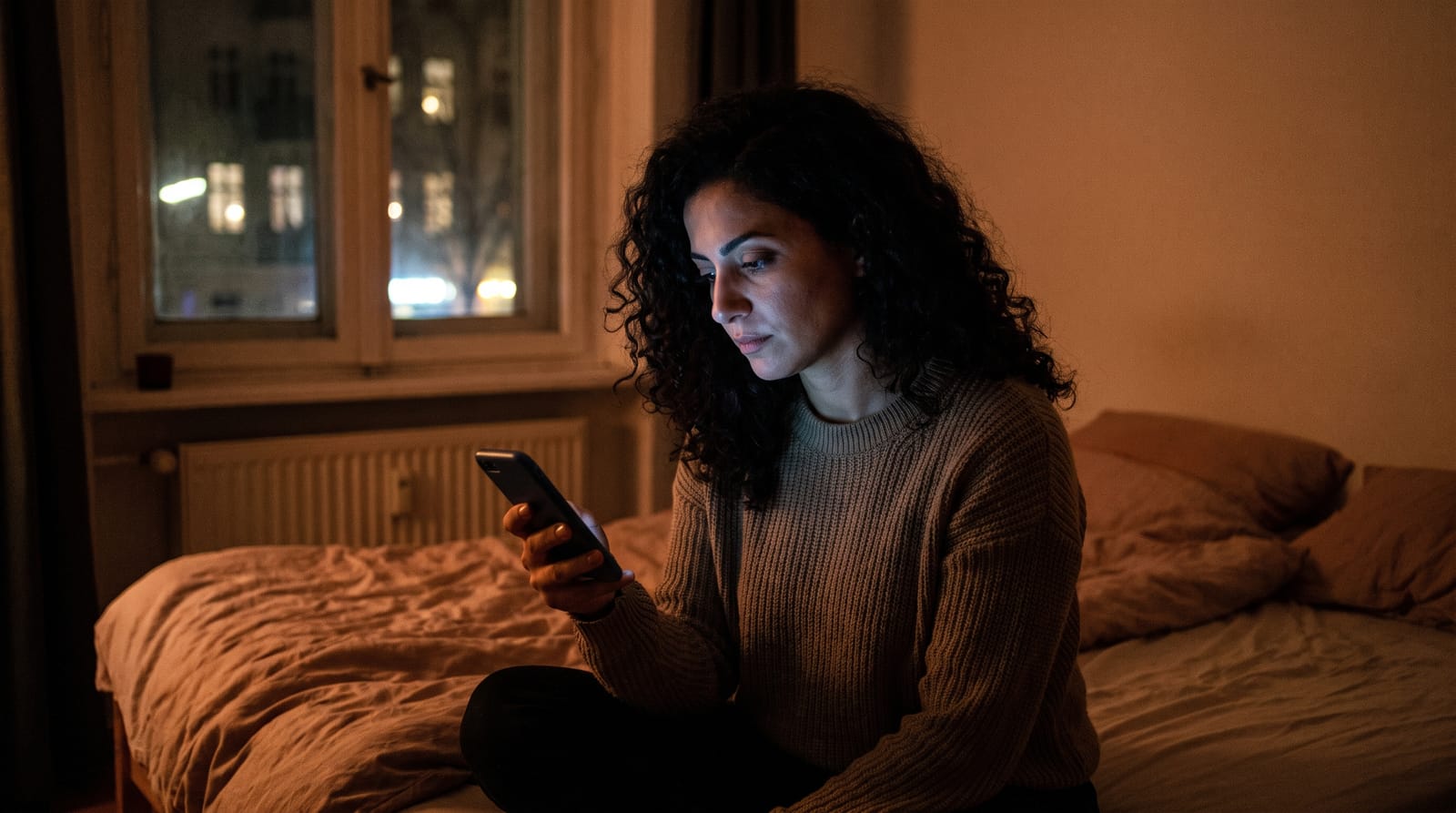
You did it. The flight is booked. Possibly the hotel too.
There were about four good minutes. You told someone, or you nearly did. You looked at the confirmation email twice.
Then your stomach dropped.
Now you are sitting there wondering what you have done, and the cancellation policy is open in another tab. It is somewhere between eleven at night and two in the morning, and cancelling feels like the sensible thing an adult would do.
Here is the short version. Panicking after you book is normal. It is so common that it is closer to a stage than a warning.
It does not mean you have made a mistake. Most of the time it means the trip stopped being an idea.
Why the Panic Starts After You Book, Not Before
Nothing about your trip changed between the moment you clicked and the moment your stomach dropped.
Same country. Same dates. Same hotel you had researched for weeks and felt fine about an hour ago. No new information arrived in those four minutes.
What changed is that you can no longer not go.
Before you booked, everything was reversible. You could plan for months and it cost you nothing. At any point you could quietly stop, and nobody would know there had been a plan at all.
Booking closes that off. The trip is now something you have to actively undo rather than simply drift away from.
The booking did not create the fear. It removed your escape hatch.
That is why the panic feels like it came from nowhere. It did not. It was always there, sitting behind the option to change your mind, and you only meet it once that option is gone.
Wanting to Cancel Does Not Mean You Made a Mistake
Most women in this position make the same error. They treat the strength of a feeling as evidence about the decision.
It feels enormous, therefore it must be important. It feels like dread, therefore something must be wrong. It arrived suddenly, therefore it must be my instincts warning me.
Feelings do not work like that. Intensity tells you how much something matters to you. It tells you nothing about whether you chose correctly.
You can feel genuinely awful about a good decision. Women do it constantly, before weddings, before house moves, before handing in a resignation letter they had wanted to write for two years.
Discomfort and error are not the same thing, and they feel identical from the inside.
How to Tell Panic From a Genuine Problem
This is the distinction worth getting right, because both feel urgent and only one of them should change your plans.
Here is the cleanest test, and it works specifically because you have already booked.
Ask what new information you have.
Not what new feelings. What new facts.
If the answer is nothing, you are dealing with panic. The trip you are frightened of tonight is identical to the one you booked while calm. Nothing has changed except that it became real.
A genuine problem looks different. It has content, it is specific, and it can be named without much effort.
Your passport expires too close to the travel date. A health issue has come up that changes what is sensible. The accommodation turns out to be somewhere you would not be comfortable. The money you were counting on has fallen through. Something in your life has genuinely shifted since you booked.
Those are all real, and they all have a next step. Some of them mean cancelling, and cancelling for one of those reasons is not chickening out.
Panic has a different texture. It does not name anything. It just says this is a mistake, and gets louder when questioned.
There is one more tell. Watch the order things happen in.
You did not reason your way to wanting to cancel. The feeling arrived first, and then your mind went looking for a reason to justify it. That is why the reason it produces so often turns out to be something you had already accepted a week ago.
Notice What You Started Googling
Here is what usually happens next, and you may already be doing it.
The panic sends you back to the search bar. And what you search is not neutral.
Nobody types ordinary week in Lisbon at midnight. They type solo female traveler attacked. Worst places for women. Solo travel gone wrong. Is it dangerous for a woman alone.
Then the results confirm exactly what you were afraid of, and you feel worse, and it seems like you have discovered something.
You have not discovered anything. You wrote the answer into the question.
This is how anxiety keeps itself fed. Once you are frightened, your attention goes hunting for evidence that the fear is correct. It will always find some. The internet has evidence for everything. The rare terrible story is always available. The eleven million uneventful trips are not published anywhere.
Notice that this searching does not calm you down. It never has. If it worked, one article would have been enough, and you would not still be doing it at one in the morning.
Whatever you are looking for at that hour, it is not information.
The Cancellation Window Keeps the Argument Open
Something worth noticing about the timing of all this.
The panic tends to be loudest while cancelling is still free.
As long as there is a refundable window, the decision is technically still open, which means the argument in your head is still live. Every night you get to hold the debate again. Should I, should I not, how much would I lose.
A lot of women describe the same thing once that window passes. The noise drops sharply. Not because they became braver, but because there was nothing left to argue about, and the mind stops relitigating a decision it cannot reverse.
This is only an observation, not a strategy. Refundable bookings exist for good reasons and real emergencies happen.
But it is useful to understand what the open window is doing to you. It is not keeping you safe. It is keeping the fight going.
What Usually Happens If You Do Not Cancel
Almost nobody describes this part in advance, so here it is.
The panic does not stay at the level it is right now. That level is not sustainable and it is not the shape this takes.
The first day or two after booking is usually the worst of it. Then it recedes, and for a while you go back to being someone with a trip coming up. It surfaces occasionally, often at night, in smaller waves that pass faster each time.
Then it comes back once more in the last week before you go. That one catches women off guard, because they thought they were past it. It tends to be shorter and less convincing than the first round.
And then something fairly reliable happens. It drops away at the airport.
Not because the airport is reassuring, but because at that point there is nothing left to decide. You are not choosing anymore, you are just going. Most of what you have carried for weeks was the weight of an open decision. Once the decision closes, the weight goes with it.
Very few women report the panic surviving the first morning of the trip.
One more thing about that arc. The excitement comes back too.
It tends to return quietly, a few weeks in, usually attached to something small. Looking up what is near the hotel. Noticing the weather there. Thinking about what to pack.
Fear and excitement are not taking turns. They run alongside each other for the whole stretch, and the loudest one on any given evening is not the one telling the truth.
This Is the Moment Nobody Talks About
There is a lot of content about solo travel fear. Almost all of it is about the trip.
Eating alone. Airports. Not speaking the language. Getting lost. Being somewhere unfamiliar with nobody to check things with.
None of that is the hard part.
The hard part is right now. Sitting at home, completely safe, with a confirmation email in one tab and a cancellation link in another. Deciding whether you are going to trust the version of yourself who booked it.
She was not being reckless. She had done the research. She had thought about it for months, possibly years. She was calm, and she made a considered decision, and she is not available to defend herself tonight.
This is where most solo trips quietly end. Not at the airport. Not on the trip. In a bedroom, at midnight, three days after booking, with a very reasonable sounding explanation ready for anyone who asks.
There is one more thing that makes this moment dangerous. It is completely private.
If you cancel tonight, nobody witnesses a woman losing her nerve. They witness a woman whose plans changed. Work got busy. The timing was not right. She will do it next year.
Every one of those sentences is socially perfect. Nobody will question a single one, because none of them sound like fear, and the person saying them will half believe it too.
Nobody ever sees this moment except you. That is exactly why it decides so much.
So, You Booked a Trip and Now You Want to Cancel?
Take the fear seriously enough to check it. Ask what has actually changed since you booked.
If a real problem has appeared, deal with it. Solve it if it can be solved, and cancel if it genuinely needs cancelling. That is judgment, not fear.
If nothing has changed except that the trip became real, then you have not received new information. You have received a reaction, and reactions are not instructions.
Here is the part worth carrying out of this article. You are going to face this exact moment again.
Not just with travel. Every time you commit to something that stretches you, there will be a night a few days later. Undoing it will feel like the sensible option. Your mind will produce a well-argued case for going back to how things were.
What you do with this booking is practice for that. The trip is almost incidental.
Frequently Asked Questions
Why did I book a trip and now want to cancel? Because booking removed your ability to quietly change your mind. Planning costs nothing and commits you to nothing. Confirming does both. The fear was there the whole time, sitting behind an option you no longer have.
Is it normal to panic after booking a solo trip? Yes, and it is especially common on a first solo trip. Most women who now travel alone regularly had some version of this in the days after their first booking.
Should I cancel my first solo trip because I am scared? Not on fear alone. Cancel if something concrete has changed, such as your health, your documents, your money, or your accommodation turning out to be unsuitable. Being frightened about a trip you were calm about last week is not new information.
How do I stop regretting my travel booking? Regret usually needs an audience of one repeated argument to survive. It fades once you stop reopening the decision every night. It fades fastest once the trip is close enough to feel like something happening rather than something being weighed.
Why do I feel anxious after booking a vacation? Because commitment removes certainty about how the next few months will go, and minds prefer the version of the future they can already predict. This happens with holidays, house moves and new jobs. Solo travel simply adds being responsible for all of it yourself.
Does pre-trip anxiety go away? It reliably drops once you are actually traveling, and for most women it disappears within the first day. It also gets smaller with every subsequent trip, because you accumulate evidence that the panic was wrong the last time.
If the fear got louder after you booked and you are still deciding whether to trust yourself, that is worth understanding properly.
Take the free 2-minute quiz and find out what is actually running this.
Jordyn